Friday, September 18, 2026 / by Sharon St Clair
What to Know About Water Utilities in Peters Township, PA
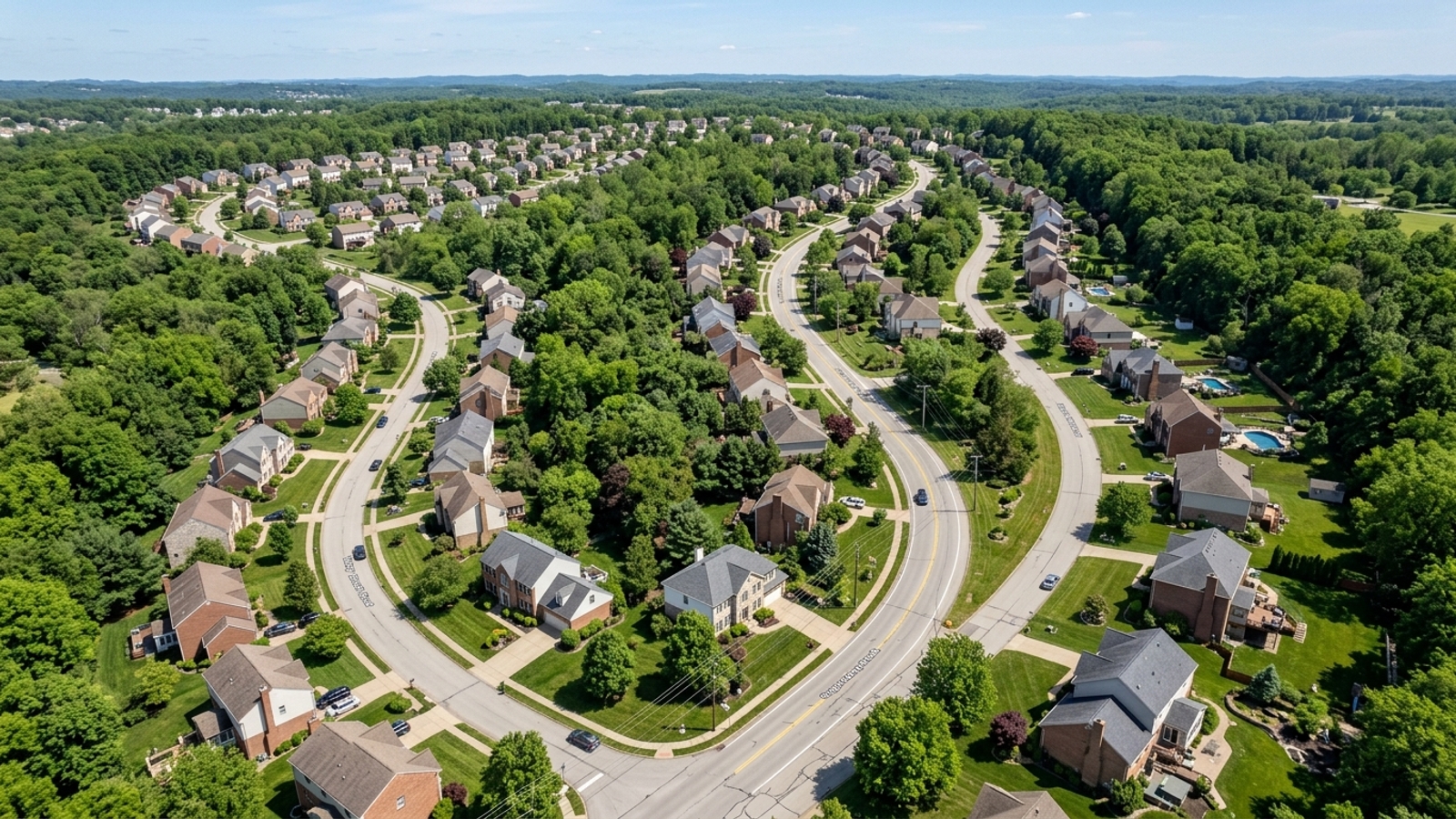
The median home price in the McMurray area of Peters Township, PA sits around $447,500, with homes spending roughly 40 days on the market. Most buyers weighing the pros and cons of living in Peters Township zero in on square footage and school districts - understandably - but the type of water service a property uses deserves the same attention. It affects your monthly budget, your maintenance calendar, and what you'll need to do before you can pour a glass of water on move-in day.
Depending on the neighborhood, a house here might tie into the public water grid or draw from a private well on the lot. Knowing how utilities in Peters Township, PA actually work will save you from surprises on both ends of that equation.
City Water vs. Well Water in Peters Township
Public water in this area doesn't come from a township-run authority - it comes from Pennsylvania-American Water, a private company that supplies potable water to homes connected to the public grid.
A private well is a different animal entirely. The home draws its own groundwater from the property, and Pennsylvania does not have a statewide well-construction permitting program for private domestic wells. The state Department of Environmental Protection (DEP) doesn't regulate them either. Once it's in the ground, it's yours to manage.
Comparing the Two Systems
Public water means a monthly bill - metered usage plus a service charge - but the utility handles all testing and treatment. The Pennsylvania Public Utility Commission (PUC) regulates those rates based on the assigned rate zone, so you're not negotiating with anyone; you pay what the PUC has approved.
Well water carries no monthly usage bill. The water itself is free once the system is installed, and you're immune to utility rate hikes. The trade-off is that you own every problem that comes with it: pump electricity, maintenance, and water quality testing all land on you.
Understanding Your Water Source
The phrase "city water well" trips up a lot of buyers. It generally refers to a large-scale municipal well that a utility company uses to supply the public grid - not a private well sitting on a residential lot. Worth clarifying before you assume.
Private wells come in several types - dug, driven, bored, and drilled. In Washington County, most modern residential wells are drilled deep into bedrock to reach stable groundwater aquifers, which tends to mean more consistent water quality than a shallow dug well.
Identifying Your Setup
Look inside the house for a water meter or a utility bill from Pennsylvania-American Water - either one tells you you're on public water. A private well typically shows itself as a well cap somewhere in the yard and a pressure tank in the basement.
If the listing doesn't specify, your agent can pull the seller's disclosures. You can also call Pennsylvania-American Water directly to ask whether the address has an active account.
What You Will Pay for Water Service
Public water customers in Peters Township pay based on the company's cost of service and capital investment - metered usage plus a monthly service charge per equivalent dwelling unit. It's predictable, which some buyers appreciate.
Well owners have no monthly water bill, but the pump runs on electricity, and that cost adds up over time. Budget for periodic maintenance too: pressure tanks and pumps don't last forever, and replacing them every decade or so is a normal part of owning a well property.
Well and Septic Costs
Water and sewer are billed separately here. Pennsylvania-American Water handles drinking water, but sewer is a different jurisdiction entirely - the Peters Township Sanitary Authority covers the western portion of the township, and the Peters Creek Sanitary Authority serves the eastern portion.
If a home runs on both a private well and a private septic system, you pay no municipal water or sewer usage fees. You pay only the direct costs of keeping both systems running, which is either a genuine advantage or a genuine headache depending on how well those systems have been maintained.
Water Quality and Testing
Pennsylvania-American Water publishes a Consumer Confidence Report covering the Pittsburgh, Mon Valley, and Washington County service areas. The most recent reports from 2025 indicated that water quality surpassed regulatory standards, with detected substances compared against EPA and PA DEP limits.
Private well owners don't get that report. They're responsible for monitoring their own water quality, and the PA DEP recommends annual testing for total coliform bacteria, nitrate, total dissolved solids, and pH. Annual. Not once when you move in.
Treating Washington County Groundwater
Local water treatment specialists will tell you that Washington County groundwater commonly shows elevated iron and manganese. One Penn State study found manganese above the secondary standard in 21 of 137 Washington County samples tested - so this isn't a rare edge case.
Well water here can also carry hydrogen sulfide, which produces a rotten-egg odor, or it can be acidic with low pH that slowly corrodes copper plumbing. Homeowners typically address these issues with water softeners, filtration systems, or reverse osmosis units sized to the specific problem.
Pros and Cons of a Private Well
The most practical disadvantage is the dependence on electricity. When the power goes out, the pump stops - full stop - unless you have a backup generator. Add to that the full cost of any mechanical failures and whatever water treatment systems the groundwater chemistry requires, and well ownership has real carrying costs.
Groundwater quality can also shift over time due to environmental factors. Regular testing is the only way to catch a change before it becomes a health issue.
Benefits of Independence
No monthly water bill is the headline benefit. Once the system is in and running, the water itself is free.
A lot of well-water homeowners also prefer that it doesn't contain the chlorine or chloramines used in municipal treatment. Whether that matters to you is personal, but it's a real difference - the water tastes and feels different from public supply, and some people find it noticeably better.
Switching Between Well and City Water
Peters Township doesn't run its own municipal water utility, so there's no township office to call about a tap-in. You contact Pennsylvania-American Water directly at 724-746-6400 to start that process.
Connecting to the public grid means paying a tap-in fee and hiring a contractor to run a line from the street main to the house. The total cost depends on the distance - a home sitting close to the main pays less than one set back on a long lot.
Keeping Both Systems
Some homeowners connect to public water for drinking and indoor use and keep the private well running for exterior irrigation. It lowers the municipal bill during summer months when irrigation demand is high.
If you go that route, the two systems must stay completely separate - no exceptions - to prevent cross-contamination. A plumber can cap the well line at the point where it would enter the house and route it exclusively to the outdoor spigots.
Buying a Home with a Well
Schedule a specialized well inspection before you close. A standard home inspection rarely covers the pump's flow rate or the condition of the underground casing, so don't assume it's included.
Request a detailed water quality test as well - specifically for the Washington County contaminants covered earlier. You need to know what you're working with before you decide whether the house needs a filtration system and, if so, what kind.
Questions for the Seller
Ask for any records on the well's depth, age, and maintenance history. When the pump or pressure tank was last replaced tells you a lot about what might be coming in the next few years.
Also ask whether the well has ever run dry during a summer drought. Historical performance isn't a guarantee, but it's better information than none - and a seller who doesn't know the answer should make you want those records more, not less.
Frequently Asked Questions
Who are the primary water and electricity providers for homes in Peters Township, PA?
Potable water is supplied by Pennsylvania-American Water. For electricity, verify the specific regional provider serving the home's address, since utility service areas can vary by location.
How many days before closing should I schedule my utility transfers in Peters Township?
Contact providers like Pennsylvania-American Water a few weeks ahead of closing to establish service. Getting that done early ensures there's no interruption on move-in day.
Is residential trash and recycling collection handled by the township, or do I need to hire a private service?
Check with the township or your real estate agent on current trash collection procedures. Specific municipal waste contracts vary and are separate from local water and sewer authorities.
Do all neighborhoods in Peters Township connect to the public sewer authority, or should I expect a septic system?
Not all homes use public sewer. The Peters Township Sanitary Authority handles sewer connections for the western portion of the township, and the Peters Creek Sanitary Authority serves the eastern portion - but some properties still rely on private septic systems.
Do local utility companies in Peters Township typically charge new homebuyers a connection fee or security deposit?
Utility companies often charge connection fees, and water rates are regulated by the Pennsylvania Public Utility Commission based on the company's cost of service. Ask Pennsylvania-American Water or your specific providers about exact deposit requirements before closing.
Which high-speed internet and fiber providers currently service the Peters Township area?
Availability depends on the specific neighborhood and street address. Check local broadband maps or ask the seller which provider currently services the home.